

Reasoning Failures, Electric Leaks, & Alien Megastructures
This week’s science bits from SWTG
Why Today’s AI Still Fails at Simple Reasoning
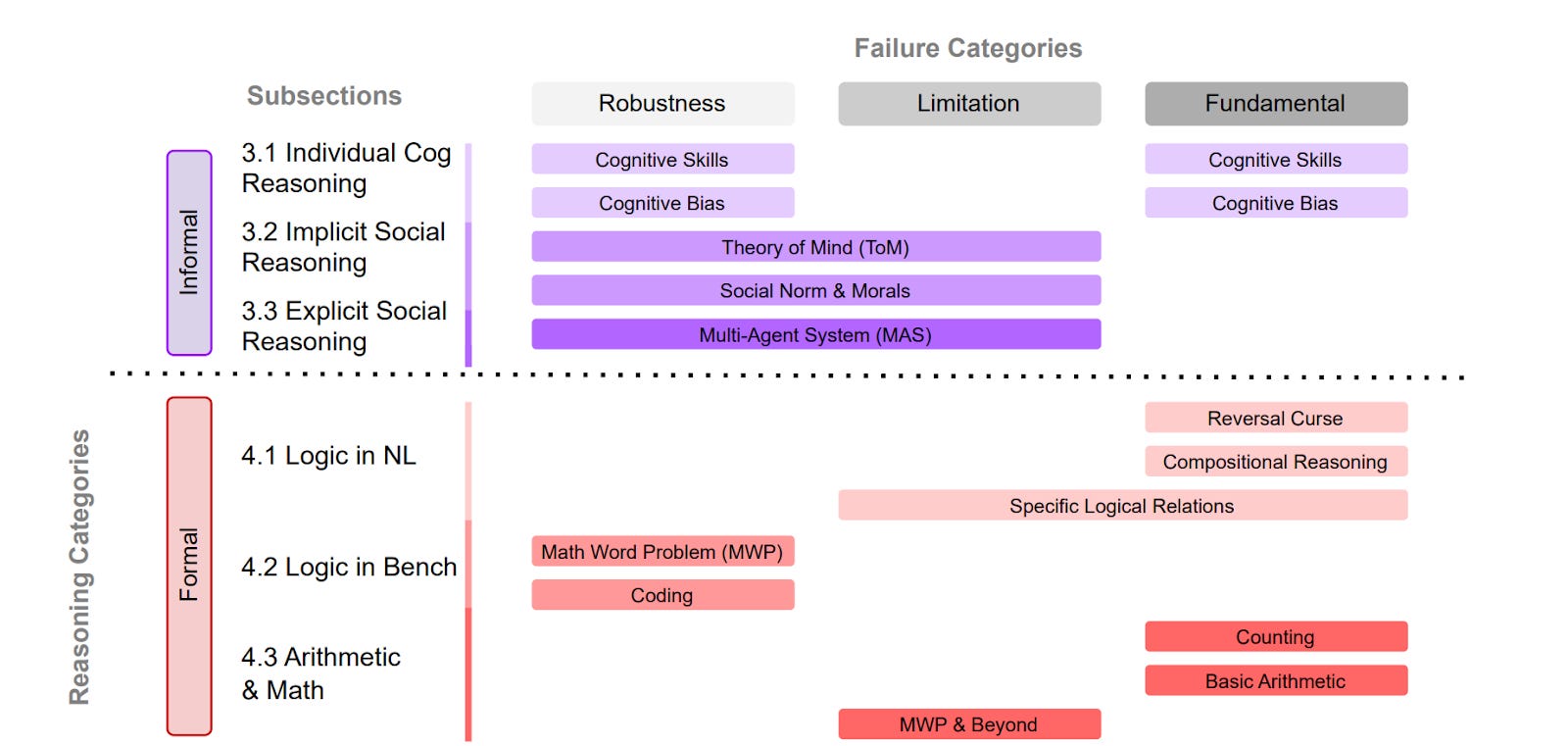
A classification of LLM reasoning failures. Image: Song et al, arXiv:2602.06176
A group of scientists at Stanford University have published a comprehensive survey examining why large language models still make basic reasoning mistakes despite their impressive performance on many tests. The researchers analysed dozens of recent studies and found that advanced AI systems often struggle with simple logic, combining pieces of information, or staying consistent when a question is slightly rephrased. They group these weaknesses into categories, including fundamental limitations linked to how the systems are built and trained, task-specific problems, and brittle behaviour where minor wording changes produce very different answers. Their results suggest that reasoning problems in LLMs are structural and can’t be overcome simply with more data or more training. Paper here.
A Subtle Leak in the Body’s Electrical System

Researchers from the University of Massachusetts report that a tiny physical effect may help explain disorders such as epilepsy and high blood pressure. The body relies on controlled electrical signals in the brain, muscles, and blood vessels. These signals are regulated by molecular structures that are often described as switching fully on or off. But by analysing one of these structures (the potassium channel) in detail using physical modelling, the team found that its “off” state is never perfectly sealed. Instead of closing entirely, it merely creates an energy barrier that usually prevents charged particles from passing, yet still allows occasional leaks due to microscopic fluctuations. But even small leaks can matter when millions of such structures are involved.
The results suggest that some diseases linked to abnormal electrical activity may partly arise not from a broken switch, but from a switch that was never perfectly off in the first place. Paper here. Press release here.
Alien Megastructures Could be Stable, New Calculation Confirms
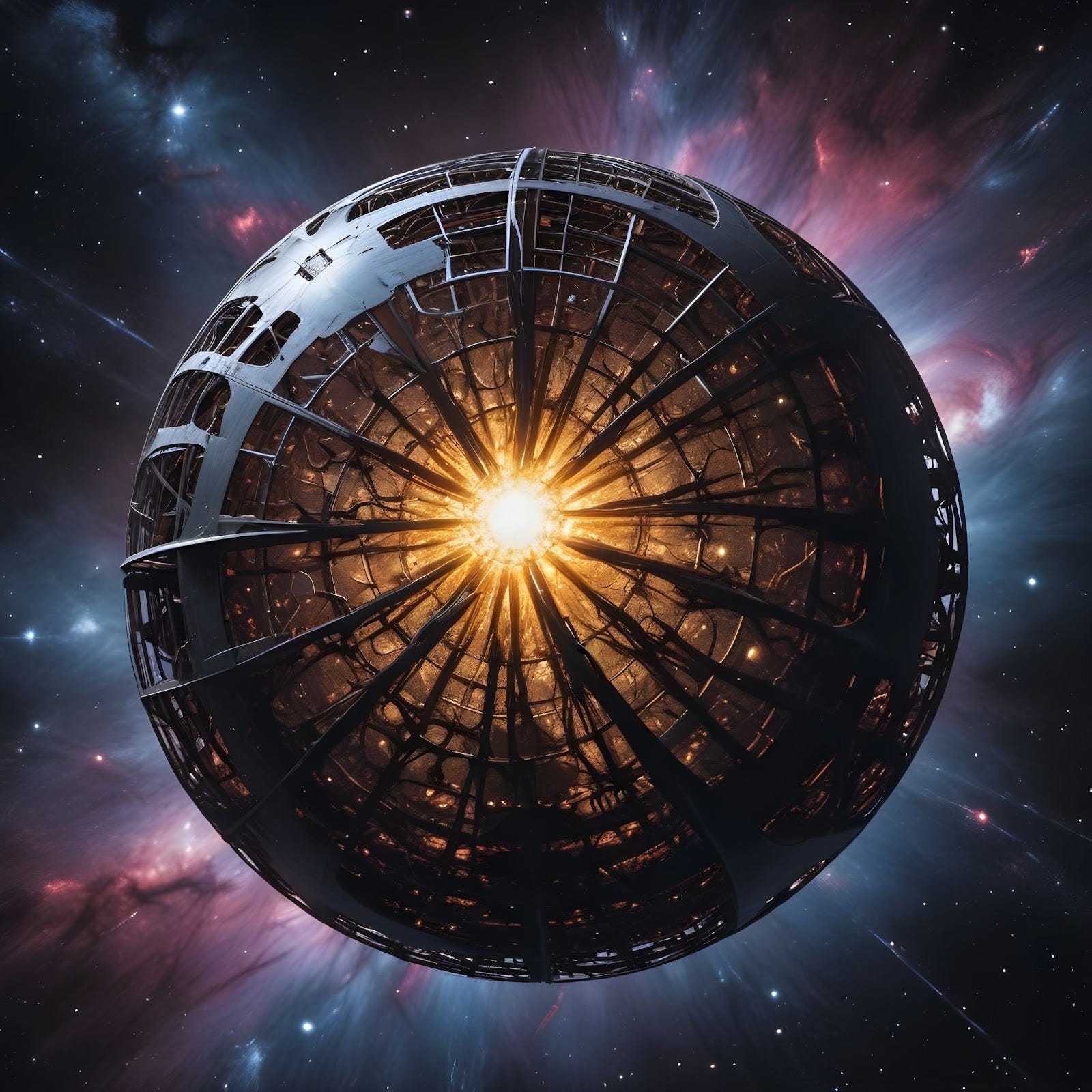
A physicist at University of Glasgow, UK, has analysed whether gigantic hypothetical space structures such as “stellar engines” and Dyson bubbles could remain stable. These speculative megastructures are often discussed in the search for extraterrestrial intelligence because they would block or alter a star’s light and produce potentially observable signatures. But it has remained unclear whether these structures could remain stable, or just drift away or collapse.
In the paper, the author shows that a single enormous reflective disk hovering above a star (the “stellar engine) is inherently unstable if it has a uniform mass distribution. However, if most of the mass is concentrated in a supporting ring at the edge, the configuration can in principle become passively stable. Likewise, a static Dyson sphere, made of many reflectors balancing gravity with radiation pressure, is generally unstable. However, it can become stable if it’s instead arranged as a more distributed cloud that does not reflect but only partially blocks the star’s light.
This doesn’t mean such structures do exist, but it supports the idea that they could exist in theory. It also gives us better guidance for what technosignatures astronomers should look for. Paper here.